
Tag Archive | "Al Qaeda"

Dunya Today 4 Mar: Gen (R) Hameed Gul Interview


Exclusive interview with Ex-DG ISI Lt Gen (R) Hameed Gul aka Hamid Gul. Mr Gul, now an articulate analyst, gives his views on “9/11 bahana hai, Afghanistan thikana hai, pakistan nishana hai”, War on Terror, Taliban, Afghanistan, Al Qaeda, US presence in the region, America’s stated vs actual objectives, etc..


Posted in Afghanistan, Dunya Today, Talk ShowsComments (0)

Dr Shireen Mazari “Ann Coulter of Pakistan”?


NOTE: Below is an Op-ED by Nicholas Schmidle on Dr Shireen Mazari and her views as it appeared in the conservative right-wing influential American magazine “The New Republic”. Mazari was dumped by The Jang Group after her strong views on War on Terror, US foreign policies, its national securities interests aborad and Pakistan government’s alliance with it. Arguably a lone ranger among the pack, Mazari now heads The Nation as its Editor and continues to vent her views in articles and popular Pakistani Talk Shows. She has regularly been called “belonging to the Establishment” for whatever it is meant to be at different stages of Pakistan’s engagement with the West..

By Nicholas Schmidle

In late August, a couple of weeks after a U.S. drone strike incinerated Baitullah Mehsud, leader of the Pakistani Taliban, the country’s most popular televised chat show, “Capital Talk,” hosted a panel to discuss national security. Among the guests was a squat, middle-aged woman with short black hair, streaked with silver dye, named Shireen Mazari. A defense analyst and public intellectual, Mazari is known for her hawkish nationalism–and deep suspicions of India and the United States. Her presence in the studio suggested that, despite the enormous threat her country faced from homegrown terrorists, the conversation that night wouldn’t center around Mehsud or the Pakistani Taliban.

Instead, over the course of the next half hour, the panel discussed reports that Blackwater, the North Carolina–based defense contractor that recently changed its name to Xe Services, was operating in Pakistan. Hamid Mir, the host of “Capital Talk,” showed video footage of Islamabad’s most expensive neighborhoods, featuring multi-story villas with high walls and satellite dishes. The homes looked like any other on the street. But red arrows, superimposed on the screen, pointed to allegedly incriminating electrical generators and surveillance cameras perched atop the walls. “American undercover people are coming,” Mazari said. “They are renting homes, and Blackwater is providingsecurity, running death squads and assassination squads … It is an occupation, by default.”

Mazari’s hunt for American spies and undercover defense contractors was only getting started. In September, she was named editor of The Nation, an English-language daily often described as “Fox News in Pakistan.” (Earlier this year, one columnist dubbed Mazari the “Ann Coulter of Pakistan.”) Throughout the fall, The Nation has published multiple front-page stories on the location of new “Blackwater dens” around Islamabad. It featured a news story last month titled “mysterious us nationals,” which described “two suspicious foreigners wandering in the guise of journalists … [who] seemingly belonged to the US spy agency CIA.” The proof? That they “were driven towards the US Consulate.” (The “mysterious US nationals” turned out to be an English freelance photographer and an Australian photographer who works for Getty.)

The low point, however, came a couple of weeks earlier, when The Nation fronted a story titled “journalists as spies in fata?”–a reference to Pakistan’s federally administered tribal areas–that cited anonymous law enforcement sources accusing Matthew Rosenberg, an American correspondent for The Wall Street Journal, of working as a “chief operative” for the CIA, Blackwater, and the Mossad. “We put in a question mark,” said Mazari, referring to the punctuation at the end of the headline, when I asked her whether she realized she was endangering Rosenberg’s life. (Daniel Pearl, also a Journal reporter, was kidnapped in Karachi in early 2002, accused of being a CIA agent, and beheaded.)

In the war against Al Qaeda and the Taliban, the United States and Pakistan are ostensibly on the same side. But, as the Obama administration prepares to pour tens of thousands of new troops into Afghanistan, it faces a daunting array of challenges from its allies in Islamabad. Perhaps none is as disturbing as the anti-Americanism that is being fueled by Pakistan’s mainstream media. In a twisted development, most Pakistanis now view the United States as their greatest threat and enemy, usurping a place that India seemed primed to occupy eternally. And Mazari, who holds a Ph.D. from Columbia University, may represent the vanguard of a well-educated, English-speaking, secular elite increasingly charged with hypernationalism and antipathy toward the United States. Mixing fact with demagoguery, and sometimes outright fiction, she represents yet another obstacle to Washington’s war on the Taliban.

For most of the past decade, Shireen Mazari wrote a regular column in The News, a popular English-language newspaper owned by the largest private media conglomerate in Pakistan. The country does not exactly have a free press–this fall, Reporters Without Borders ranked Pakistan in the bottom 10 percent of its Press Freedom Index, squeezed between Uzbekistan and Equatorial Guinea–but there is no shortage of dissenting opinions aired on any of the country’s myriad private TV channels. Over the past couple of years, much of the commentariat’s energy has gone into denouncing President Asif Ali Zardari and U.S. foreign policy. It’s an effort that Mazari, whose articles often criticize the country’s civilian leadership and breathlessly recount CIA plots to dismember Pakistan and seize its nuclear weapons, has played a large part in leading.

I first met Mazari in 2006, when I was a visiting scholar at the Institute of Strategic Studies, Islamabad (issi), a foreign ministry–funded think tank. She was the head of the institute, and I was in the country as a freelance journalist, but, at dinner parties, Mazari often introduced me as her “resident CIA agent”–a joke that’s never really funny and grew awfully uncomfortable over time. Eventually, in January 2008, I was expelled from Pakistan following months of reporting in Taliban-affected parts of the country. Last month, in a TV interview, Mazari said, “There is a history of American journalists misbehaving in Pakistan,” after which she mentioned my travels to supposedly off-limits regions and added, “Eventually, he had to be deported.”

Far from being on the fringes of Pakistani society, Mazari is something of an establishment figure. She was appointed director general of the institute by Pervez Musharraf’s government not long after the general seized power in an October 1999 coup. In subsequent years, Mazari says she enjoyed considerable influence within Musharraf’s circles, and those ties, combined with her writing, have led to charges that she is merely a pawn for Pakistan’s military and intelligence agencies, which remain critical of U.S. power and are critical of Zardari’s floundering attempts at governance. “It’s quite obvious that her views are in consonance with people in the agencies,” explained Arif Nizami, the former editor of The Nation, who led the paper from 1986 until this September, when Mazari took over. “She’s let loose by certain people in the agencies who would like to see the pot burning,” said an acquaintance of Mazari’s in Islamabad. “She’s just a mouthpiece.”

That doesn’t mean that Mazari’s charges are all without merit. There is, of course, a U.S. military and intelligence presence in Pakistan, and, two weeks ago, the New York-based liberal magazine The Nation–no relation to its Pakistani namesake–published a lengthy article alleging the activities of Xe/Blackwater in Pakistan on behalf of the U.S. military. Xe and the U.S. government deny the charges, but, when I spoke with Mazari soon after, she said, “I certainly feel vindicated.” She later added, “Our interests and the Americans’ interests don’t coincide.”

During Hillary Clinton’s recent visit to Pakistan, the secretary of state spent much time arguing that U.S. and Pakistani interests did, in fact, coincide. To a cynical questioner who believed that Pakistan was fighting America’s war, Clinton replied, “We have a common enemy.” Indeed, in the past six months alone, the Pakistani Taliban has exploded bombs in Islamabad; attacked police and military sites in Punjab; overrun the Army General Headquarters in Rawalpindi; and bombed sites throughout Peshawar. More than 400 people have been killed in terrorist attacks since October. Behind closed doors, senior Pakistani leaders seem to realize the threat, which is why Islamabad accepts U.S. anti-terrorism efforts, silently condoning the drone strikes, for example, while condemning them for public effect. Mazari’s objections–like those of many other Pakistanis–are certainly understandable, but the reckless, oftentimes unsubstantiated way in which Mazari presents them only deepens the so-called “trust deficit” between the two countries.

In August, for example, Mazari wrote that an American citizen named Craig Davis had been arrested in Peshawar and deported because of his alleged ties to Creative Associates, a government contractor that she dubbed the “central organization” for U.S.-funded “suspicious, covert operations” in Pakistan. “Clearly there is a threatening US agenda seeking out our nuclear sites and assassinating people, thereby adding to our chaos and violence,” she continued. Weeks later, she wrote that Davis was back in the country. The U.S. Embassy objected to the story, and The News’s editorial-page editor went back and fact-checked the column. Some of Mazari’s assertions–Davis had not, in fact, been deported–didn’t check out. So, before her next column ran, the editor opted to hold the piece an extra day and show it to a lawyer. In the interim, Mazari announced that she was taking the job as editor of The Nation, though not before accusing the U.S. ambassador, Anne Patterson, of interfering with Pakistan’s free press. (It wasn’t the first time Mazari had accused the Americans of disrupting her career. When the Pakistan People’s Party won elections in 2008, they promptly removed her from her position at the issi, a development for which she also blamed Patterson.)

Mazari and The Nation, though smaller than The News, were a perfect fit; The Nation’s publisher has advocated nuking India and is also noted for his conspiracy-mongering. Since taking over, Mazari claims that the paper has been “seeing a big revival,” with circulation having “jumped up tremendously.” According to both Pakistanis and Pakistan-watchers, The Nation has become a right-wing outlet like Fox News. But Hamid Mir, the host of “Capital Talk,” cautioned against making the comparison–for fear of it becoming a self-fulfilling prophesy. “The Nation is not very big and not very influential,” he said. “If The Nation becomes Fox News, then Pakistan will burn.”

Already, the Taliban have seized on the propaganda opportunity that Mazari has opened. When a bomb ripped through a Peshawar market in late October, killing more than 100 people, the Taliban, increasingly concerned about alienating the Pakistani public, refused to take credit for the blast. Instead, Mehsud’s successor, the Fu Manchu–styled Hakimullah Mehsud, blamed Blackwater. If that line becomes accepted, then not only will Pakistan continue to burn, but the U.S.-Pakistan relationship may burn along with it. (Courtesy: The New Republic)

(Nicholas Schmidle, a fellow at the New America Foundation, is the author of To Live or to Perish Forever: Two Tumultuous Years in Pakistan. The opinion expressed by the author do not necessarily reflect the views and policies of PKonweb)

Posted in Articles, PoliticsComments (7)

A Tribute to Benazir Bhutto


Martyred Mohtarma Benazir Bhutto’s last book “Reconciliation: Islam,Democracy and the West” –perhaps her last testament –was a befitting epitaph to her incomplete but glorious life.

As a liberal, progressive and democratic Muslim leader in the mould of Quaid-i-Azam and  Zulfikar Ali Bhutto, her impassionate plea for an understanding between Islam and the West was to save the god’s little earth of an inevitable disaster.

She believed that the war Muslims in particular and the world in general should be concerned about was not a clash of civilisations–between Islam and the West but between moderates and extremists, a conflict between those who believe in higher human values and those who want to turn the clock back. The 9-11 terrorist attacks hurt her deeply. She felt it “twisted the values of a great and noble religion and potentially set the hopes and dreams of a better life for Muslims back a generation.”  Muslims, she believed “became [al Qaeda's] victims too.”

In Reconciliation she makes a dedicated effort to reclaim Islam from the abuse of the extremists who are hell-bent to employ it for political advantage. She succinctly brought out the difference between Al-Qaeda’s and Islam’s real concept of Jihad.

In Islam Jihad meant a personal struggle “to follow the right path,” in any field of human endeavour. The extremists had distorted this for fighting the Soviets in Afghanistan in the service of the United States to end up ten years down the road to convert terrorism into a full time business.

Bhutto believed in the total empowerment of women as laid in Holy Quran. She rightly wrote that fair treatment of women and minorities in Islam was revolutionary and far more progressive than what was practiced by contemporary Christian and Jewish societies.

Islam’s concept of socio-economic equality for all was the most powerful phenomenon that could pose a challenge to any other ideology any time. However, Islam’s egalitarian traditions were constantly hijacked by the despotic Muslim rulers who reduced religion to a tool to consolidate their hold on power.  In order to resurrect the real Islam in the growing global complexities Bhutto had been pleading for ijtihad — the early Islamic tradition of challenge and inquiry to interpret the Holy Quran in relevance to and context of the current era. Her observations in “Reconciliation” are true manifestation of the real spirit of Islam as reflected in the concept of Ijtehad. As a befitting tribute to her we need to reiterate the Quran’s message of peace and tolerance and not let it drown in a sea of extremism.

Her refutation of it gave Samuel Huntington’s theory of the “Clash of Civilizations” a severe blow. She proved his thesis wrong that conflict between Islam and the West was inevitable.  She rightly concludes that Huntington’s work “has actually helped provoke the confrontation it predicts… The clash of civilizations theory is not just intellectually provocative: it fuels xenophobia and paranoia both in the West and in the Islamic world.”

Instead, she observed, the tension was within Islam itself.”The failure to resolve that tension peacefully and rationally threatens to degenerate into a collision course of values, spilling into a clash between Islam and the West.”

Solutions offered by her were neither naive nor simplistic.  She suggested an end to dictatorship, greater economic investment, better education and a “reconciliation corps” of cultural ambassadors. She died pleading for a Marshall Plan for Afghanistan and Pakistan to salvage them from going on the path to disaster.

The tragedy of Bhutto’s assassination was not so much in the loss of one of the greatest leaders. It actually amounted to the demolition of the only bridge of sanity between East and West. She had emerged as the prophet of peace and reconciliation in a world that was being fractured by those who had been sold out to the inevitability of a clash of civilizations and revival of the spirit of crusades.

She worked on the premise that there was little distance between a dream and a reality. She was strongly of the view that it was impossible to kill a dream and if one wanted to kill it then one could only do it by making that dream come true.

It was her dream to make Pakistan a great country. It was this dream that took her into the lion’s den to singe his beard despite knowing that he was after her blood. She will be remembered eternally for her unsurpassable contribution for the cause of democracy, empowerment of women and less privileged. She was a dauntless leader—a role model–who was unafraid to speak her mind even in the face of death.

Democracy in Pakistan was just the revenge she wanted from her killers. Both she and her people triumphed over the barrel of the gun with the power of their ballot but the challenges confronting the country today are too many. Hydra-headed enemy of democracy is at it again. If the masses turn a blind eye to the machinations of the vested interest sprouting in various shapes and forms — against the democratic dispensation—there shall be no turning back.

The month of December has become indelible in our life as a nation. Pakistan’s founder Quaid-e-Azam was born on December 25, it saw the creation of Bangladesh on December 16 and it got the permanent scar of Benazir Bhutto’s assassination on December 27.

Notwithstanding the other factors that played havoc for dismembering the country, history would always remember the role of the apex judiciary in casting the most fatal stone for speeding up the process of disintegration. Had not Chief Justice of Pakistan Justice Muhammad Munir upheld  the dissolution of Pakistan’s mother parliament by Governor General Ghulam Muhammad and that of Prime Minister Khawaja Nazimuddin in 1953, Pakistan would have remained united and by now would have become a formidable democracy. That decision became the fore-runner for other judges to follow to sanctify dictators.

Unfortunately, our judiciary has repeatedly allowed itself to be abused by military and civilian dictators. It played into the hands of Ayub, Yahya, Zia and General ® Musharraf. Justice ® Qayyum was abused by Saifur Rahman to have martyred Benazir Bhutto and Zardari convicted to please his “Bara Sahib”. The media doomsayers seem to be doing their sinister bit to create conditions for the scuttling of democracy.

Changes have been forecast. They have been hearing the marching sounds of boots. In their Tv shouting matches, they have been found passionately pleading– on the verge of tears– calling upon the jackboots to intervene and also the masses to revolt. They want judicial activism to judicially murder democracy through confrontation between different pillars of the state.

Pakistan, its people, its government and its armed forces will surely triumph over extremism. Though singled out to be the sole target–President Asif Zardari at the helm of affairs with Prime Minister Yousuf Raza Gilani Pakistan would continue to plod into pastures new. The best tribute to the memory of martyred Bhutto would be to thwart all the anti-democratic machinations and not to allow history to repeat.

(*The writer is the High Commissioner of Pakistan to UK and a confidante and Advisor to Mohtarma Benazir Bhutto, former Prime Minister of Pakistan)

Posted in Articles, Wajid Shamsul HasanComments (1)

5 Americans Had Maps of Chashma Nuclear Power Site


Police are trying to determine whether five Americans detained in Pakistan had planned to attack a complex that houses nuclear power facilities.

The young Muslim men, who are from the Washington, D.C., area, were picked up in Pakistan earlier this month in a case that has spurred fears that Westerners are traveling to the South Asian country to join militant groups.

Pakistani police and government officials have made a series of escalating and, at times, seemingly contradictory allegations about the men’s intentions, while U.S. officials have been far more cautious, though they, too, are looking at charging the men.

A Pakistani government official alleged Saturday that the men had established contact with Taliban commanders and planned to attack sites in Pakistan. Earlier, however, local police accused the men of intending to fight in Afghanistan after meeting militant leaders.

The men had a map of Chashma Barrage, a complex that along with nuclear power facilities houses a water reservoir and other structures, said Javed Islam, a senior police official in the Sargodha area of Punjab province. He stressed the men were not carrying a specific map of any nuclear power plant, but rather the whole of Chashma Barrage.

The detained men also had exchanged e-mails about the area, Islam said.

“We are also working to retrieve some of the deleted material in their computers,” he said.

Pakistan has a nuclear weapons arsenal, but it also has nuclear power plants for civilian purposes.

Any nuclear activity in Pakistan tends to come under scrutiny because of the South Asian nation’s past history of leaking sensitive nuclear secrets due to the actions of the main architect of its atomic weapons program, Abdul Qadeer Khan. But as militancy has spread in Pakistan, officials have repeatedly insisted the nuclear weapons program is safe.

Pakistani police plan to recommend that courts charge the five men with collecting and attempting to collect material to carry out terrorist activities in Pakistan, police official Nazir Ahmad told The Associated Press. The punishments for those charges range from seven years to life in prison, he said.

Officials in both countries have said they expected the men would eventually be deported back to the United States, but charging the men in Pakistan could delay that process. Pakistan’s legal system can be slow and opaque.

In an interview with The Associated Press on Saturday, Punjab province Law Minister Rana Sanaullah said the men had established contact with Taliban commanders. He said they had planned to meet Pakistani Taliban chief Hakimullah Mehsud and his deputy Qari Hussain in Pakistan’s tribal regions before going on to attack sites inside Pakistan.

The nuclear power plant “might have been” one of the targets, Sanaullah alleged.

The FBI, whose agents have been granted some access to the men, is looking into what potential charges they could face in the U.S. Possibilities include conspiracy to provide material support to a terrorist group.

The U.S. Embassy has declined to comment on the potential charges and would not say what efforts Washington was making to bring the men back. The five were arrested in Sargodha earlier this month, but are being held in Lahore, the capital of Punjab province.

Posted in News, USAComments (0)

Suicide Bombing Kills Five Near Security Checkpoint in Pakistan


PESHAWAR, Pakistan — A suicide bombing on Thursday killed five people near a security checkpoint in this restive city that has borne the brunt of Pakistan’s rising Islamist insurgency, police and government officials said.

It was the latest in a deadly string of attacks in Peshawar, a northwestern city near the Afghan border and a rugged tribal region where the military has been battling the Pakistani Taliban. Authorities said they were not sure of the target of Thursday’s blast, which killed a police officer and civilians, but many recent attacks have targeted security forces in apparent retaliation for the military operation.

Security has increased at entrance points to and inside Peshawar, but extremists have responded by switching tactics, said Aslam Khan, a police official. Instead of using car bombs, insurgents are now deploying lone suicide bombers on foot, he said — a move that has reduced casualties but not the fear that has gripped the city.

The bomber detonated his explosives in a busy area near a military checkpoint, office buildings and a Christian girls’ school, authorities said. The attack, which came two days after a blast that killed four people at the city’s press club, injured 25 and prompted panicked residents to shut shops and stay indoors.

“The bomb blasts are aimed at creating unrest in the city, and to some extent they are successful,” said Muhammad Sagheer, 42, a trader who works near the bomb site. “The markets and business areas are showing a deserted look.”

Government officials warned of more attacks in coming days, particularly on the Muslim holiday of Ashura, a Shiite day of mourning. Mian Iftikhar Hussain, a provincial government spokesman, said the military needed to launch wider operations in the lawless tribal areas that have become bases for Taliban and al-Qaeda militants.

“We should hit their hideouts before they attack us,” Hussain said. Militants, he said, “have spared none in these ongoing acts of terrorism.”  (News sourced from: washingtonpost)

Posted in NewsComments (2)

U.S. Escalates ‘ Drone War’ in Tribal Region


It may take months before the United States deploys 30,000 new troops to Afghanistan under Barack Obama’s latest surge, but the U.S. military is already rushing to expand its “Drone War” in neighbouring Pakistan’s troubled tribal areas.

Around 4 a.m. on Thursday, a swarm of pilotless Predator drones unleashed 12 Hellfire missiles on two suspected Taliban and al-Qaeda hideouts in the mountain district of Datta Khel in North Waziristan, killing 17 suspected terrorists, including seven “Arabs.”

In the first attack, a remote-controlled drone fired two missiles at a car carrying two insurgents as it entered the village of Dosali around midnight.

Hours later, in an unusual pack attack, five drones attacked two compounds in neighbouring Ambarshaga. Local Pakistani intelligence officials say a withering blast of 10 missiles killed at least 15 insurgents.

The attacks came just a week after a similar raid hit Saleh al-Somali, al-Qaeda’s external operations chief, in a nearby village just a few kilometres from the Afghanistan border.

The attacks mark a dramatic escalation of a remote-control push-button war that has seen the U.S. military deliver punishing body blows to al-Qaeda’s leadership.

Since Mr. Obama came to power in January, his administration has carried out about 50 unmanned drone strikes inside Pakistan, more than the Bush administration in its final three years.

There were only 10 Predator strikes in Pakistan during 2006 and 2007.

Since unveiling his new strategy for the Afghan conflict this month, Mr. Obama is said to have signed off on an expanded Central Intelligence Agency war against al-Qaeda and Taliban targets inside Pakistan, ordering the hunt for Osama bin Laden into overdrive.

U.S. officials are also said to be pushing a reluctant Pakistani government to allow the CIA to extend its drone attacks from North and South Waziristan to Baluchistan, where Afghan Taliban leaders are believed to be hiding in and around Quetta.

U.S. officials refuse to discuss details, but intelligence experts say the sudden surge in activity has killed 14 of the 20 most wanted al-Qaeda terrorists.

Leon Panetta, the CIA director, recently called the spy agency’s drones the “most effective weapon” available to take on Taliban and al-Qaeda terrorists.

In the last few months, they have killed hundreds of Taliban and al-Qaeda rebels, decapitating a mid-level leadership responsible for cross-border attacks into Afghanistan and forcing al-Qaeda’s top leaders to worry about their very survival.

Drones are seductive weapons, promising the military the advantage of “higher ground” without risking U.S. lives.

A testament to U.S. technical ingenuity, the drones used in Afghanistan and Pakistan can fly 700 kilometres to their targets, then loiter overhead for 14 hours before returning to their base.

They are equipped with sensor packages that can intercept and analyze electronic signals, and eavesdrop on cellphone calls or simple conversations. Drones can also search out targets — day or night and sometimes even through walls. (News sourced from: www.nationalpost.com)

Posted in Afghanistan, USAComments (0)

LIVE WITH TALAT on AAJ TV: Dec 2


Talat Hussain analyzes and dissects different elements of Obama’s new Afghan policy significant to Pakistan’s vital national interests and security challenges..


Posted in Live With Talat, Talk ShowsComments (0)

Pakistan Taliban Regrouping Outside Waziristan


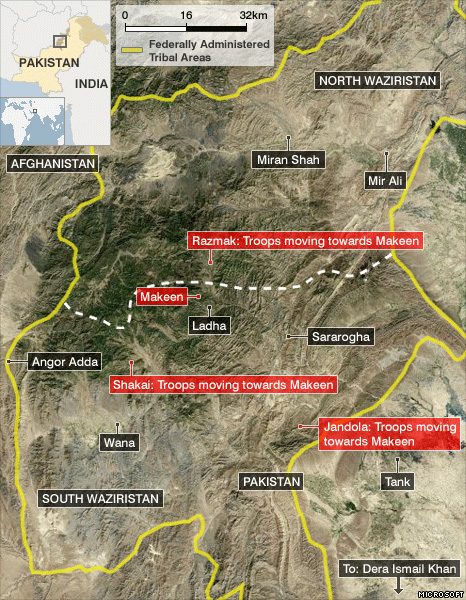
Reporting from Islamabad, Pakistan – Since the Pakistani army launched a long-awaited offensive last month to destroy the Taliban in South Waziristan, many militants have fled to nearby districts and begun to establish new strongholds, a strategy that suggests they will regroup and remain a potent threat to the country’s weak, U.S.-backed government.

Pakistani Taliban militants have escaped primarily to Kurram and Orakzai, districts outside the battle zone but still within Pakistan’s largely ungoverned tribal areas along the Afghan border, villagers there say. The military lacks a significant presence in much of these areas, making them an ideal environment for the Islamic militants to regroup.

Newly arrived militants have terrorized Pashtun residents and replenished their coffers through kidnappings and robberies, villagers said during interviews in the Kurram and Orakzai districts. With AK-47s and rocket launchers slung over their shoulders, the militants have begun patrols through the new territory and have set up checkpoints.

“They come to our houses and terrorize us,” said Fareed Ullah, a student in Weedara, a hamlet of mud-walled huts in central Kurram. “They are kidnapping our elders and stealing our cars. We have no way of rising up against them, and there’s no government here to help us. . . . Kurram is in trouble because of them.”

Pakistani military commanders say that after five weeks of fighting, they are in the final stages of their offensive aimed at crushing Islamic insurgents in South Waziristan, a rugged expanse of mountains and plateaus that for years has served as the primary base of operations for the Pakistani Taliban and as a sanctuary for Al Qaeda fighters.

When the offensive began Oct. 17, Pakistani military leaders said they faced a fighting force of as many as 10,000 battle-hardened militants. Thus far, however, the army has put the number of militants killed at 500.

None of the Pakistani Taliban’s top leaders have been reported captured or killed. And accounts from villagers in nearby districts suggest that many militants simply fled South Waziristan.

The 30,000 troops involved in the South Waziristan offensive have reported taking control of almost all the villages and roads once held there by Taliban militants. At the start of the offensive, military commanders and government leaders said they wanted to wrap up the operation before winter set in. They now say they are on track to meet that goal ahead of schedule.

In some cases, Pakistani troops met fierce resistance from Taliban militants and Al Qaeda-allied Uzbek fighters as they advanced on villages such as Kotkai and Sararogha, a key nerve center for the Pakistani Taliban. In many places, however, troops found that Taliban and Al Qaeda militants had already left.

Army leaders say dislodging Taliban and Al Qaeda fighters from their strongholds may be enough to neutralize them.

“Once dislodged, they will be disorganized,” said Pakistani army spokesman Maj. Gen. Athar Abbas. “Their actions will not have that kind of coordination which was displayed when they were attacking our cities and towns.”

However, militants have succeeded in engineering a devastating string of terrorist attacks on Pakistani cities that has coincided with the offensive. Especially hard hit has been Peshawar, a northwestern city with a population of almost 3 million on the fringe of Pakistan’s volatile tribal areas. More than 245 people, most of them civilians, have been killed in 10 bomb attacks in the largely Pashtun city since early October. Authorities believe militants fleeing South Waziristan to their new havens far closer to Peshawar are probably behind many of the attacks.

Taliban and Al Qaeda militants were able to easily flee South Waziristan, experts say, because government and military leaders announced their intent to carry out a major offensive in the region weeks before troops moved in. That gave militants ample time to make their escape.

“The strategy has been bad,” said Imtiaz Gul, a security analyst based in Islamabad, the Pakistani capital. “You don’t carry out operations after making such announcements. This area gives them huge space for mobility. So when crunch time comes, they can disperse to safer places, regroup, reorganize and hit the state somewhere else.”

The Obama administration has said it is pleased with gains made by the Pakistani military against the Taliban in South Waziristan. But U.S. officials have nonetheless questioned Pakistan’s resolve to find and eliminate Al Qaeda leaders and commanders believed to have been hiding there.

Villagers in Kurram and Orakzai, as well as two Orakzai-based Taliban commanders, say Al Qaeda-aligned Arab, Chechen and Uzbek fighters from South Waziristan are now in their villages.

“From their faces we can see they are foreigners,” said Jaleel Rahman, a Pashtun of the village of Marghan in central Kurram. “Sometimes they speak in Arabic, sometimes in English. Their leaders stay at the houses of influential people in our area. And we can’t do anything about it.”

Almost always, militants fleeing South Waziristan arrive at night in large groups piled into Toyota Land Cruisers and pickup trucks, villagers say. The newcomers have established hide-outs in the foothills and mountains skirting the villages, and have been seen digging trenches in mountainsides. Without any troops to confront them, they freely roam through villages, demanding money, food and guns.

“They are in the hundreds here,” said Sher Muhammad, a tribesman in the village of Tandar in central Kurram. “They tell us to do what they do. And whatever they like, they get by force.”

Both the Orakzai and Kurram districts had large sections controlled by Pakistani Taliban militants before fighters from South Waziristan began appearing. However, the Taliban presence in those districts wasn’t considered as large as the militant group’s forces in South Waziristan, long considered the hub for terrorism in Pakistan.

Maulana Zainul Abideen, a Pakistani Taliban commander in the Orakzai region, said during an interview in his village of Dabori that locals have set aside empty houses for fellow militants and their families arriving from South Waziristan.

“They accompany us wherever we go on patrol,” Abideen said. “They contacted our elders, and our elders allowed them to come here.”

Another Taliban commander in the Orakzai region, Mufti Khursheed, said the fleeing militants had to agree they would not “carry out any activity without us, would have to patrol with us and would join us wherever we need them. They will not take any step without our permission.”

Pakistani fighter jets and helicopter gunships have stepped up airstrikes on suspected Taliban hide-outs in Orakzai and Kurram, military leaders say. But analysts say that may not be enough. Once South Waziristan is secured, some say, a ground offensive either in Orakzai or Kurram may be needed to keep the Taliban from establishing strongholds there on a par with what it had in South Waziristan. The military says it plans to keep a sizable troop presence in South Waziristan to hold the ground gained, just as it did in its previous Swat Valley offensive.

“The militants have the capacity to regroup and come back,” said retired Gen. Talat Masood, an Islamabad-based defense analyst. “They should not be allowed to consolidate. . . . South Waziristan has been a tactical success of sorts, but by no means is it a victory.” (News sourced from los angeles times)

Posted in NewsComments (1)

Taliban Acceptable if They Renounce Al-Qaeda: USA


PKonweb Monitor

The Taliban can rejoin the “social and political fabric of Afghanistan” if they renounce al-Qaeda, US special envoy Richard Holbrooke said on Tuesday.

Holbrooke, a close ally of Secretary of State Hillary Clinton who was appointed taskmaster for Afghanistan and Pakistan (AF-PAK) affairs, said it is a major part of the Unites States policies.

In an interview with SPIEGEL, Holbrooke said: “Majority of the Taliban do not support Mulla Omar’s extreme views and that there is room for them to rejoin the social and political fabric of Afghanistan if they renounce al-Qaeda and reintegrate peacefully into Afghanistan. This is a major part of the Unites States policies. Washington is not seeking to destroy every person who supports the Taliban. Our goal is to destroy al-Qaeda, a terrorist organization with global reach, which attacked the United States, which conducted attacks in London, Madrid and Bali, and Mumbai and Islamabad, which supports attacks in Afghanistan through other groups.”

Holbrooke’s statement comes as President Obama prepares to announce his decision after the Thanksgiving holidays on sending more US troops to Afghanistan. Gen McCrystal, commander of US forces in Afghanistan has said he needed around 40,000 more soldiers to fight the Al Qaeda, the Taliban and their supporters.

The US special envoy said Washington was not in Afghanistan to build a perfect democracy there but to help the Afghans strengthen their own capabilities. “We are not there to take over the country, we are there to help the Afghans build their own capacity so that their security forces can replace the international forces over an acceptable period of time,” he said.

Asked if Afghan President Hamid Karzai was still Washington’s partner in the war, Holbrooke said: “Yes, he is our partner.” The US respected Karzai and looked forward to working with him closely, he added. (MAMOSA)

Posted in Afghanistan, News, USA, WorldComments (0)

Investigators Quiz Musharraf Over Bhutto Assassination


ISLAMABAD, Pakistan — A United Nations commission investigating the assassination of former Prime Minister Benazir Bhutto said Tuesday that it met with Pervez Musharraf, the military ruler who was in power at the time.
“The Commission of Inquiry had a frank, open and cordial conversation with former President Musharraf, having been able to pose to him many queries on issues central to its mandate,” the group said in a statement.
The statement did not say where the team met with Musharraf.

His spokesman, Nasim Ashraf, told Pakistan’s English-language newspaper, Dawn, that the meeting took place in Philadelphia, Pennsylvania, on October 27.

“While I met the team, I strongly oppose any international probe into Pakistan’s domestic affairs,” Musharraf said in a statement, carried by Dawn.

The U.N. commission arrived in Pakistan in July to look into the circumstances surrounding the assassination of Bhutto.

The former prime minister returned home in 2007 from a eight-year self-imposed exile to participate in the country’s general elections.

She was killed at a rally in the city of Rawalpindi on December 27 when a bomber blew himself up near her limousine. Videotape showed a gunman firing toward her vehicle as she left the rally.

Musharraf’s government and the CIA contended the killing was orchestrated by Baitullah Mehsud, a leader of the Pakistani Taliban with ties to al Qaeda.

But nationwide polls found that a majority of Pakistanis believe Musharraf’s government was complicit in the assassination.

Following her death, Bhutto’s supporters took to the streets. The ensuing violence caused damage of more than $200 million (12 billion Pakistani rupees) and killed at least 58 people, government officials said.

Her party, the Pakistan People’s Party, went on to win the most number of seats in elections held the following year.

Musharraf resigned. And Bhutto’s husband, Asif Ali Zardari, became president.

Zardari asked the United Nations to look into his wife’s death to try and reconcile inconsistencies of how she died and who was behind the attack.

This, despite an inquiry by London’s Scotland Yard ruled that Bhutto died from the blast and not gunfire.

The U.N. commission said in its statement that it has met with “dozens” of people in the course of its fact-finding mandate.

It is expected to submit a report to U.N. Secretary-General Ban Ki-moon by year’s end.

(News sourced from: CNN)

Posted in NewsComments (0)

“We Are NOT”


The Taliban and al-Qaeda have denied involvement in the Peshawar bomb blast and said they do not explode bombs in bazaars and mosques.

According to a statement of al-Qaeda, they are not involved in the killing of innocent people. According to al-Qaeda sources, the elements, who want to defame Jehad and refugees, are behind the Peshawar bomb blast.

The al-Qaeda sources say they would continue Jehad against America and its agents across the world. The banned Tehrik-e-Taliban Pakistan (TTP) in an email sent to the media also condemned the Peshawar blast and denied its involvement in the Meena Bazaar explosion.

{Source: The News}

Posted in NewsComments (0)

Deciding Moments for Pakistan – Syed Atiq Ul Hassan


By Syed Atiq ul Hassan

In my article on the 61st anniversary of Pakistan, published on 14th of August, 2008, titled, ‘Pakistani nation in anxiety – is it a start of an end’, I wrote; “Reassembly of Taliban & Al-Qaeda in Afghanistan and rising activities of Taliban in the Northern territories of Pakistan made President Musharraf a man of broken promises in the eyes of United States. Therefore, this is time to kick out Musharraf and use the civilian card. So, who could be the best choice for Washington than Musharraf’s political foes? Increasing operation against Taliban and their supporters in the northern Pakistan and alongside Pak-Afghan border and Washington’s silence on ruling coalition’s movement against Musharraf clearly indicate the obvious deal behind the scene between Washington and ruling coalition.

Sharing common interest all these political thugs together busy in impeaching President Musharraf basically serving US agenda….. if this analysis is true than it is quite clear that ruling coalition’s move for impeachment of the President and launching the operation against Taliban and Al-Quaeda on Pakistani soil is another American game… But this time for political thugs it will be like playing with fire and this fire will spread all over Pakistan. War against Taliban inside Pakistan will transform Pakistan into Iraq. Unfortunately, my analysis is seemed to be true. Pakistan is going through the nightmare every single day. Whatever we were witnessing in Iraq is now happening in Pakistan. Pakistan is losing its civilians and army personnel almost every day. Today, a common Pakistani, in Pakistan and abroad, is fearful when see what has been happening in the country. The entire nation and institutions including secret services have been hijacked by the United States. Almost every second day, someone from US administration, senator, parliamentarian or high ranking army officer is sitting in Islamabad. On the other hand, the main cities of Pakistan are in the hands of terrorists. Even the government spokespersons are accepting that the government machinery is unable to prevent the suicide bombers. Mosque, Schools, Government offices, Police centres and even army buildings are being attacked? The leaders of Taliban have threatened to librate Pakistani cities and control Pakistani borders. United States had been forcing former army ruler General Pervez Musharraf to go after Taliban and Al-Qaeda? United States wanted to ground its troops on Pakistani soil and attack Taliban within Pakistani territory. United States wanted General Pervez Musharraf to withdraw Pakistani troops from Indian border. General Musharraf in his seven years tenure somehow managed to ignore all these US demands. United States managed to kick out General Musharraf with the help of Pakistani politicians. The only leader which could resist and might not compromise on the integrity of Pakistan was ‘Benazir Bhutto’. She was murdered and still the Pakistani nation is waiting to know the murderer/s despite her husband is the supreme power of the country. As Mr. Asif Ali Zardari and his company took control over Pakistan it looked like this was all part of the plan. Pakistan has been bombarded by what they claim Pakistani Taliban. And within a year, Pakistani troops are now engaged in fierce fighting with Taliban in South Waziristan which Pakistani military and ISI never wanted and the reasons were simple to understand. These are the same Taliban who were created by the ISI with the help of CIA. How come these elements who had been regarded as the protector of western border of Pakistan became the enemy of the State? Who are providing them heavy ammunition and courage to throw their lives in suicide missions? Whose agenda is being fulfilled? The current anarchical situation created many questions? The situation is worse than in 1971. If Pakistan further disintegrates into pieces who will be the beneficiaries? Nevertheless, any simple mind can understand by analysing the sequence of events happened since the former General Pervez Musharraf was forced to leave the power. United States could not make any progress in order to provide peace and security to the people of Afghanistan in the last 7 years instead created more uncertainty and chaos. Now as I said earlier part of the plan, United States is after Pakistan.

Eventually increase combat operations against Taliban in Afghanistan by US forces will create more repulsion on Pakistani Afghan-Pak borders. At the same time, his administration has tripled the Pakistani aid with conditions – enough bribes for Pakistani corrupt politicians to shut-up their mouth and to show the world that US want to build Pakistan. The Pakistani ruling politicians are claiming victories on Kerry-Lugar aid package of &7.5 billion. He is the same John Kerry who very loudly called Pakistan nuclear program as unsafe and to be opened for inspection during his Presidential nomination election campaign. The US administration purposely assigned Mr. Kerry the task to design Pakistan’s aid package so that Pakistan’s nuclear program can be controlled and military sovereignty can be sabotaged. According to a news report Senator John Kerry used very harsh language when he met Pakistani politicians and army generals during his recent visit of Islamabad that told them if you did not want the money say so, United States was not forcing you to take it but then bear consequences. Unfortunately, corrupt, incompetent and power greedy politicians who dragged the country into this horrible situation also showed their total failure in defeating these anti-Pakistan elements and to maintain peace, security and stability of the country. If anything can make the country free from the enemies of Pakistan is the people of Pakistan. The Pakistani nation has to show solidarity and unity among them against these terrorists. The nation has to stand-up without wasting time and fearlessly condemns these elements who have dangerous philosophies and concepts on the name of religion.

The people of Pakistan have to courageously help in identifying them to the law enforcement authorities to punish these culprits. The intellectuals, writers, journalists, artists and activists have to wake up the nation. The lawyers and civic society had demonstrated historic power to reinstate the Chief Justice. They paralysed the entire country. Now this is the real need to show to the world and to those who challenged the sovereignty of Pakistan that they will kick them out from the country and safe the borders of Pakistan. This is the time to demonstrate ‘Pakistan First’ – Solidarity, Unity and Faith.

{Source: Observer}

Posted in ArticlesComments (0)

advert

Top Talk Shows Today

  • Jirga 11 Mar: Taliban & Al Qaeda
    March 12, 2010 | 7:00 am

    A MUST WATCH: Exclusive talk with Col. (R) Imam (Creator of Taliban 1983 – 2001), Brig. (R) Asad Munir (Ex-ISI 1999 – 2004) on Taliban, Al Qaeda, War on Terror, Afghanistan, and the future scenario. Interesting analysis, insightful discussion..

  • Off the Record 11 Mar: Dynamics of Punjab by-Polls
    March 12, 2010 | 6:45 am

    Dynamics & Outcomes of By-Polls in Punjab. Underhand deals and overboard board manipulations. Guests: Dr.Firdous Ashiq Awan (PPP), Rana Sana ullah Khan (PML-N), Ch.Zaheer Uddin (PML-Q)..

  • Kal Tak 11 Mar: Insight Into Constitution Committee
    March 12, 2010 | 6:25 am

    Insight into Constitution Committee, Some details of New Constitution Package, Balochistan issue. Guests: Syed Naveed Qamar (PPP), Sen. Ishaq Dar (PML-N), Sen. Dr Abdul Maalik (NP)..

  • Capital Talk 11 Mar: Politics of New Constitution Package
    March 12, 2010 | 5:44 am

    Delays and politics behind new Constitution Package, abolition of 17th Amendment, Provincial Autonomy and Name Change of NWFP. Guests: Sardar Mehtab Ahmed Khan Abbasi (PML-N), Sen. Ilyas Bilour (ANP), Mir Muhammad Usman (MNA Balochistan), Mehreen Anwar Raja (PPP)..

  • Dunya Today 11 Mar: Politics of by-Polls
    March 12, 2010 | 4:47 am

    Politics of by-polls in Pakistan: Strange bedfellows, familiar results. Also, has NAB been stuffed with Zardari men? Guests: Sen. Syed Faisal Raza Abidi (PPP), Mazhar Abbas (Analyst), Hanif Abbasi (PML-N)..

  • Tonight With Najam Sethi 10 Mar: Punjab Politics, Cricket
    March 11, 2010 | 4:08 am

    Muneeb Farooq discusses with Najam Sethi upcoming announcement on Charter of Democracy and 17th amendment before March 23rd by President Zardari and politics behind Pakistan Cricket fiasco..

  • Off the Record 10 Mar: NA-123 by-Poll Results
    March 11, 2010 | 2:59 am

    NA-123 By-poll Results: Hafiz Salman Butt (Jamaat Islami), Umar Cheema (Spokesman PTI) discuss NA-123 by-poll in Lahore where PML-N candidate Pervaiz Malik won. Both Jamaat Islami and Pakistan Tehreek Insaaf claim irregularities..

  • Capital Talk 10 Mar: Month of March in Pak
    March 11, 2010 | 2:18 am

    Importance of March in Pakistan politics and history. By-elections in Punjab. Guests: Sen. Jehangir Badar (PPP), Senator Prof.Ibrahim Khan (Jamaat Islami), Mushahid Hussain Syed, Hamza Shahbaz Sharif (PML-N)

  • RSSMore »

Daily Posts

March 2010
M T W T F S S
« Feb    
1234567
891011121314
15161718192021
22232425262728
293031  

Archives

PHVsPjxsaT48c3Ryb25nPndvb19hZGltYWdlPC9zdHJvbmc+IC0gaHR0cDovL2NvbnRlbnQuY2FydG9vbmJveC5zbGF0ZS5jb20vP2ZlYXR1cmU9YTE5MGViNTFlYzE1YTU2NDM5OWQwMTE3YjAxZjI2ZGQ8L2xpPjxsaT48c3Ryb25nPndvb19hZHNfcm90YXRlPC9zdHJvbmc+IC0gdHJ1ZTwvbGk+PGxpPjxzdHJvbmc+d29vX2FkdnRfY2hrPC9zdHJvbmc+IC0gZmFsc2U8L2xpPjxsaT48c3Ryb25nPndvb19BZHZ0X3BhbmVsPC9zdHJvbmc+IC0gPGRpdiBhbGlnbj1cImNlbnRlclwiPg0KCTx0YWJsZSBib3JkZXI9XCIwXCIgd2lkdGg9XCI3MzBcIiBjZWxsc3BhY2luZz1cIjBcIiBjZWxscGFkZGluZz1cIjBcIiBoZWlnaHQ9XCIxMDBcIj4NCgkJPHRyPg0KCQkJPHRkIGFsaWduPVwiY2VudGVyXCI+DQoJCQk8YSBocmVmPVwiaHR0cDovL2Ryc2Fyd2FyLndvcmRwcmVzcy5jb20vMjAwOS8xMi8wNi91cGNvbWluZy1ldmVudC1qYW4tOS0yMDEwLWhvbm91cmluZy10aGUtbGVnYWN5L1wiPg0KCQkJPGltZyBib3JkZXI9XCIwXCIgc3JjPVwiaHR0cDovL3Brb253ZWIuY29tL2FkdnRzL2Jhbm5lcjJiLmdpZlwiIHdpZHRoPVwiNzI4XCIgaGVpZ2h0PVwiOTBcIj48L2E+PC90ZD4NCgkJPC90cj4NCgkJPC90YWJsZT4NCjwvZGl2PjwvbGk+PGxpPjxzdHJvbmc+d29vX2FkX2ltYWdlXzE8L3N0cm9uZz4gLSBodHRwOi8vcGtvbndlYi5jb20vd3AtY29udGVudC90aGVtZXMvZ2F6ZXR0ZS1kZXYvZ2F6ZXR0ZS9pbWFnZXMvYWQtMTI1eDEyNS5qcGc8L2xpPjxsaT48c3Ryb25nPndvb19hZF9pbWFnZV8yPC9zdHJvbmc+IC0gaHR0cDovL3Brb253ZWIuY29tL3dwLWNvbnRlbnQvdGhlbWVzL2dhemV0dGUtZGV2L2dhemV0dGUvaW1hZ2VzL2FkLTEyNXgxMjUuanBnPC9saT48bGk+PHN0cm9uZz53b29fYWRfaW1hZ2VfMzwvc3Ryb25nPiAtIGh0dHA6Ly9wa29ud2ViLmNvbS93cC1jb250ZW50L3RoZW1lcy9nYXpldHRlLWRldi9nYXpldHRlL2ltYWdlcy9hZC0xMjV4MTI1LmpwZzwvbGk+PGxpPjxzdHJvbmc+d29vX2FkX2ltYWdlXzQ8L3N0cm9uZz4gLSBodHRwOi8vcGtvbndlYi5jb20vd3AtY29udGVudC90aGVtZXMvZ2F6ZXR0ZS1kZXYvZ2F6ZXR0ZS9pbWFnZXMvYWQtMTI1eDEyNS5qcGc8L2xpPjxsaT48c3Ryb25nPndvb19hZF9tcHVfYWRzZW5zZTwvc3Ryb25nPiAtIDwvbGk+PGxpPjxzdHJvbmc+d29vX2FkX21wdV9kaXNhYmxlPC9zdHJvbmc+IC0gZmFsc2U8L2xpPjxsaT48c3Ryb25nPndvb19hZF9tcHVfaW1hZ2U8L3N0cm9uZz4gLSBodHRwOi8vcGtvbndlYi5jb20vYWR2dHMvYWQxMjAxMC5naWY8L2xpPjxsaT48c3Ryb25nPndvb19hZF9tcHVfdXJsPC9zdHJvbmc+IC0gaHR0cDovL3VyZHUucGtvbndlYi5jb20vPC9saT48bGk+PHN0cm9uZz53b29fYWRfcGFnZTwvc3Ryb25nPiAtIFNlbGVjdCBhIHBhZ2U6PC9saT48bGk+PHN0cm9uZz53b29fYWRfdG9wX2Fkc2Vuc2U8L3N0cm9uZz4gLSA8c2NyaXB0IHR5cGU9XCJ0ZXh0L2phdmFzY3JpcHRcIj48IS0tDQpnb29nbGVfYWRfY2xpZW50ID0gXCJwdWItNjIxNTkxNTE5MTMwNTE2MlwiOw0KLyogNDY4eDYwLCBjcmVhdGVkIDcvMjUvMDkgKi8NCmdvb2dsZV9hZF9zbG90ID0gXCI3MzU4NzMyMTcwXCI7DQpnb29nbGVfYWRfd2lkdGggPSA0Njg7DQpnb29nbGVfYWRfaGVpZ2h0ID0gNjA7DQovLy0tPg0KPC9zY3JpcHQ+DQo8c2NyaXB0IHR5cGU9XCJ0ZXh0L2phdmFzY3JpcHRcIg0Kc3JjPVwiaHR0cDovL3BhZ2VhZDIuZ29vZ2xlc3luZGljYXRpb24uY29tL3BhZ2VhZC9zaG93X2Fkcy5qc1wiPg0KPC9zY3JpcHQ+PC9saT48bGk+PHN0cm9uZz53b29fYWRfdG9wX2Rpc2FibGU8L3N0cm9uZz4gLSBmYWxzZTwvbGk+PGxpPjxzdHJvbmc+d29vX2FkX3RvcF9pbWFnZTwvc3Ryb25nPiAtIGh0dHA6Ly93d3cud29vdGhlbWVzLmNvbS9hZHMvNDY4eDYwYS5qcGc8L2xpPjxsaT48c3Ryb25nPndvb19hZF90b3BfdXJsPC9zdHJvbmc+IC0gaHR0cDovL3d3dy53b290aGVtZXMuY29tPC9saT48bGk+PHN0cm9uZz53b29fYWRfdXJsXzE8L3N0cm9uZz4gLSBodHRwOi8vZXhhbXBsZS5jb20vYWRzL2FkMV9kZXN0aW5hdGlvbi5odG1sPC9saT48bGk+PHN0cm9uZz53b29fYWRfdXJsXzI8L3N0cm9uZz4gLSBodHRwOi8vZXhhbXBsZS5jb20vYWRzL2FkMV9kZXN0aW5hdGlvbi5odG1sPC9saT48bGk+PHN0cm9uZz53b29fYWRfdXJsXzM8L3N0cm9uZz4gLSBodHRwOi8vZXhhbXBsZS5jb20vYWRzL2FkMV9kZXN0aW5hdGlvbi5odG1sPC9saT48bGk+PHN0cm9uZz53b29fYWRfdXJsXzQ8L3N0cm9uZz4gLSBodHRwOi8vZXhhbXBsZS5jb20vYWRzL2FkMV9kZXN0aW5hdGlvbi5odG1sPC9saT48bGk+PHN0cm9uZz53b29fYWx0X3N0eWxlc2hlZXQ8L3N0cm9uZz4gLSBkZWZhdWx0LmNzczwvbGk+PGxpPjxzdHJvbmc+d29vX2FyY2hpdmVzPC9zdHJvbmc+IC0gQ2hpY2tlbiBIYWxlZW0gYnkgQ2hlZiBaYWtpcjwvbGk+PGxpPjxzdHJvbmc+d29vX2F1dGhvcjwvc3Ryb25nPiAtIHRydWU8L2xpPjxsaT48c3Ryb25nPndvb19hdXRvX2ltZzwvc3Ryb25nPiAtIHRydWU8L2xpPjxsaT48c3Ryb25nPndvb19iYW5uZXJfaW1hZ2U8L3N0cm9uZz4gLSBodHRwOi8vd3d3LnNpbmdsZW11c2xpbS5jb20vYWZmaWxpYXRlcy9pbWFnZXMvYmFubmVycy80Njh4NjBfMDEuZ2lmPC9saT48bGk+PHN0cm9uZz53b29fYmFubmVyX3VybDwvc3Ryb25nPiAtIGh0dHA6Ly93d3cuc2luZ2xlbXVzbGltLmNvbS9hZmZpbGlhdGUucGhwP2tleT1RNVk2TjkmbGlua0lEPTIzPC9saT48bGk+PHN0cm9uZz53b29fYmxvY2tfaW1hZ2U8L3N0cm9uZz4gLSBodHRwOi8vcGtvbndlYi5jb20vd3AtY29udGVudC90aGVtZXMvZ2F6ZXR0ZS1kZXYvZ2F6ZXR0ZS9pbWFnZXMvMzAweDI1MC5naWY8L2xpPjxsaT48c3Ryb25nPndvb19ibG9ja191cmw8L3N0cm9uZz4gLSBodHRwOi8vd3d3Lndvb3RoZW1lcy5jb208L2xpPjxsaT48c3Ryb25nPndvb19icmVha2Noazwvc3Ryb25nPiAtIHRydWU8L2xpPjxsaT48c3Ryb25nPndvb19icmVha3NlbDwvc3Ryb25nPiAtIHBob3RvPC9saT48bGk+PHN0cm9uZz53b29fYnJlYWt0ZXh0PC9zdHJvbmc+IC0gPC9saT48bGk+PHN0cm9uZz53b29fY3VzdG9tX2Nzczwvc3Ryb25nPiAtIDwvbGk+PGxpPjxzdHJvbmc+d29vX2N1c3RvbV9mYXZpY29uPC9zdHJvbmc+IC0gPC9saT48bGk+PHN0cm9uZz53b29fZmVhdHVyZWRfY2F0ZWdvcnk8L3N0cm9uZz4gLSBGZWF0dXJlZDwvbGk+PGxpPjxzdHJvbmc+d29vX2ZlYXRfZW50cmllczwvc3Ryb25nPiAtIDM8L2xpPjxsaT48c3Ryb25nPndvb19mZWVkYnVybmVyX2lkPC9zdHJvbmc+IC0gcGtvbndlYi90aGpXPC9saT48bGk+PHN0cm9uZz53b29fZmVlZGJ1cm5lcl91cmw8L3N0cm9uZz4gLSBodHRwOi8vZmVlZHMuZmVlZGJ1cm5lci5jb20vPC9saT48bGk+PHN0cm9uZz53b29fZmxpY2tyX2VudHJpZXM8L3N0cm9uZz4gLSAxMjwvbGk+PGxpPjxzdHJvbmc+d29vX2ZsaWNrcl9pZDwvc3Ryb25nPiAtIDwvbGk+PGxpPjxzdHJvbmc+d29vX2ZsaWNrcl91cmw8L3N0cm9uZz4gLSBGbGlja3IgVVJMPC9saT48bGk+PHN0cm9uZz53b29fZm9vdF9jb2xvcjwvc3Ryb25nPiAtIDMzMzwvbGk+PGxpPjxzdHJvbmc+d29vX2Zvb3RfZGVzPC9zdHJvbmc+IC0gPGI+QXVzdHJhbGlhIGluIGNvbnRyb2wgb2YgSG9iYXJ0IFRlc3QgYWdhaW5zdCBQYWtpc3Rhbi4uLjwvYj48L2xpPjxsaT48c3Ryb25nPndvb19mb290X2VuPC9zdHJvbmc+IC0gZmFsc2U8L2xpPjxsaT48c3Ryb25nPndvb19mb290X2hlYWQ8L3N0cm9uZz4gLSBQYWtpc3RhbiBWcyBBdXN0cmFsaWEuLi48L2xpPjxsaT48c3Ryb25nPndvb19mb290X2hlYWRfc2l6ZTwvc3Ryb25nPiAtIDQwPC9saT48bGk+PHN0cm9uZz53b29fZm9vdF9oZWlnaHQ8L3N0cm9uZz4gLSA5MDA8L2xpPjxsaT48c3Ryb25nPndvb19mb290X2xpbms8L3N0cm9uZz4gLSBodHRwOi8vaS50ZWxlZ3JhcGguY28udWsvdGVsZWdyYXBoL211bHRpbWVkaWEvYXJjaGl2ZS8wMTU1MC9hdXMtcGFrXzE1NTA4NjVjLmpwZzwvbGk+PGxpPjxzdHJvbmc+d29vX2Zvb3Rfd2lkdGg8L3N0cm9uZz4gLSA5MDA8L2xpPjxsaT48c3Ryb25nPndvb19mb290X3d0aDwvc3Ryb25nPiAtIDkwMDwvbGk+PGxpPjxzdHJvbmc+d29vX2dvb2dsZV9hbmFseXRpY3M8L3N0cm9uZz4gLSA8c2NyaXB0IHR5cGU9XCJ0ZXh0L2phdmFzY3JpcHRcIj4NCiAgICB2YXIgaW5mb2xpbmtfcGlkID0gMzczMzE7DQogICAgdmFyIGluZm9saW5rX3dzaWQgPSAxOw0KPC9zY3JpcHQ+DQo8c2NyaXB0IHR5cGU9XCJ0ZXh0L2phdmFzY3JpcHRcIiBzcmM9XCJodHRwOi8vcmVzb3VyY2VzLmluZm9saW5rcy5jb20vanMvaW5mb2xpbmtzX21haW4uanNcIj48L3NjcmlwdD4NCjxzY3JpcHQgdHlwZT1cInRleHQvamF2YXNjcmlwdFwiPg0KdmFyIGdhSnNIb3N0ID0gKChcImh0dHBzOlwiID09IGRvY3VtZW50LmxvY2F0aW9uLnByb3RvY29sKSA/IFwiaHR0cHM6Ly9zc2wuXCIgOiBcImh0dHA6Ly93d3cuXCIpOw0KZG9jdW1lbnQud3JpdGUodW5lc2NhcGUoXCIlM0NzY3JpcHQgc3JjPVwnXCIgKyBnYUpzSG9zdCArIFwiZ29vZ2xlLWFuYWx5dGljcy5jb20vZ2EuanNcJyB0eXBlPVwndGV4dC9qYXZhc2NyaXB0XCclM0UlM0Mvc2NyaXB0JTNFXCIpKTsNCjwvc2NyaXB0Pg0KPHNjcmlwdCB0eXBlPVwidGV4dC9qYXZhc2NyaXB0XCI+DQp2YXIgcGFnZVRyYWNrZXIgPSBfZ2F0Ll9nZXRUcmFja2VyKFwiVUEtNTY2OTI4Ni0xXCIpOw0KcGFnZVRyYWNrZXIuX3RyYWNrUGFnZXZpZXcoKTsNCjwvc2NyaXB0Pg0KPCEtLSBTdGFydCBRdWFudGNhc3QgdGFnIC0tPg0KPHNjcmlwdCB0eXBlPVwidGV4dC9qYXZhc2NyaXB0XCI+DQpfcW9wdGlvbnM9ew0KcWFjY3Q6XCJwLTkxYkFLZ2xSd1B2R01cIg0KfTsNCjwvc2NyaXB0Pg0KPHNjcmlwdCB0eXBlPVwidGV4dC9qYXZhc2NyaXB0XCIgc3JjPVwiaHR0cDovL2VkZ2UucXVhbnRzZXJ2ZS5jb20vcXVhbnQuanNcIj48L3NjcmlwdD4NCjxub3NjcmlwdD4NCjxpbWcgc3JjPVwiaHR0cDovL3BpeGVsLnF1YW50c2VydmUuY29tL3BpeGVsL3AtOTFiQUtnbFJ3UHZHTS5naWZcIiBzdHlsZT1cImRpc3BsYXk6IG5vbmU7XCIgYm9yZGVyPVwiMFwiIGhlaWdodD1cIjFcIiB3aWR0aD1cIjFcIiBhbHQ9XCJRdWFudGNhc3RcIi8+DQo8L25vc2NyaXB0Pg0KPCEtLSBFbmQgUXVhbnRjYXN0IHRhZyAtLT48L2xpPjxsaT48c3Ryb25nPndvb19ncmF2YXRhcjwvc3Ryb25nPiAtIHRydWU8L2xpPjxsaT48c3Ryb25nPndvb19oZWFkPC9zdHJvbmc+IC0gQ2FydG9vbjwvbGk+PGxpPjxzdHJvbmc+d29vX2hlYWRsaW5lX2FkPC9zdHJvbmc+IC0gPHNjcmlwdCB0eXBlPVwidGV4dC9qYXZhc2NyaXB0XCI+PCEtLQ0KDQpnb29nbGVfYWRfY2xpZW50ID0gXCJwdWItNjIxNTkxNTE5MTMwNTE2MlwiOw0KDQovKiA3Mjh4OTAsIGNyZWF0ZWQgNy8xLzA5ICovDQoNCmdvb2dsZV9hZF9zbG90ID0gXCI1NDg0NzgxMTMyXCI7DQoNCmdvb2dsZV9hZF93aWR0aCA9IDcyODsNCg0KZ29vZ2xlX2FkX2hlaWdodCA9IDkwOw0KDQovLy0tPg0KDQo8L3NjcmlwdD4NCg0KPHNjcmlwdCB0eXBlPVwidGV4dC9qYXZhc2NyaXB0XCINCg0Kc3JjPVwiaHR0cDovL3BhZ2VhZDIuZ29vZ2xlc3luZGljYXRpb24uY29tL3BhZ2VhZC9zaG93X2Fkcy5qc1wiPg0KDQo8L3NjcmlwdD4NCjwvbGk+PGxpPjxzdHJvbmc+d29vX2hlYWRsaW5lX2Noazwvc3Ryb25nPiAtIGZhbHNlPC9saT48bGk+PHN0cm9uZz53b29faGVhZGxpbmVfaGVhZDwvc3Ryb25nPiAtIFphcmRhcmkgQW5kIFRoZSBJZGVzIE9yIEViYnMgT2YgTWFyY2gsIFRoZSBMb25nIE1hcmNoIE9yIFRoZSBRdWljayBNYXJjaD88L2xpPjxsaT48c3Ryb25nPndvb19oZWFkbGluZV9oZWFkX2NvbG9yPC9zdHJvbmc+IC0gY2MwMDAwPC9saT48bGk+PHN0cm9uZz53b29faGVhZGxpbmVfaGVhZF9zaXplPC9zdHJvbmc+IC0gNDg8L2xpPjxsaT48c3Ryb25nPndvb19oZWFkbGluZV9pbWc8L3N0cm9uZz4gLSBodHRwOi8vcGtvbndlYi5jb20vOTAwL21tLTkwMC5qcGc8L2xpPjxsaT48c3Ryb25nPndvb19oZWFkbGluZV9saW5rPC9zdHJvbmc+IC0gaHR0cDovL3Brb253ZWIuY29tLzIwMTAvMDMvMDkvbWVyYXktbXV0YWJpcS04LW1hci1pZGVzLW9yLWViYnMtb2YtbWFyY2gvPC9saT48bGk+PHN0cm9uZz53b29faGVhZGxpbmVfbGluazA8L3N0cm9uZz4gLSBodHRwOi8vcGtvbndlYi5jb20vMjAxMC8wMy8wOS9tZXJheS1tdXRhYmlxLTgtbWFyLWlkZXMtb3ItZWJicy1vZi1tYXJjaC88L2xpPjxsaT48c3Ryb25nPndvb19oZWFkbGluZV9saW5rMTwvc3Ryb25nPiAtIGh0dHA6Ly9wa29ud2ViLmNvbS8yMDEwLzAzLzA4L21lcmF5LW11dGFiaXEtNy1tYXItemFyZGFyaS1leWVpbmctc2FmZS1leGl0LzwvbGk+PGxpPjxzdHJvbmc+d29vX2hlYWRsaW5lX2xpbmsyPC9zdHJvbmc+IC0gaHR0cDovL3Brb253ZWIuY29tLzIwMTAvMDMvMDcvbWVyYXktbXV0YWJpcS02LW1hci1pcy10aGUtc3lzdGVtLWNvbGxhcHNpbmcvPC9saT48bGk+PHN0cm9uZz53b29faGVhZGxpbmVfcmVsPC9zdHJvbmc+IC0gV0FUQ0ggTWFyY2ggOCBlcGlzb2RlIG9mIE1FUkFZIE1VVEFCSVEgd2l0aCBEci4gU2hhaGlkIE1hc29vZCBvbiBHZW8gIGFuZCBhbmFseXN0c+KAmSB2aWV3cyBvbiB1bnJhdmVsaW5nIGV2ZW50cyBpbiBwb3dlcnMgb2YgY29ycmlkb3I6PGJyPjwvbGk+PGxpPjxzdHJvbmc+d29vX2hlYWRsaW5lX3RleHQ8L3N0cm9uZz4gLSBBbmFseXN0cyBkaXNjdXNzIFByZXNpZGVudCBBc2lmIFphcmRhcmnigJlzIGRpbWluaXNoaW5nIHBvd2VyLCBoaXMgaW52b2x2ZW1lbnQgaW4gdGhlIGFmZmFpcnMgb2YgdGhlIGdvdmVybm1lbnQgYW5kIGhpcyBob2xkIG9uIFBha2lzdGFuIFBlb3BsZXMgUGFydHkgKFBQUCkuIFdoYXQgaXMgWmFyZGFyaeKAmXMgZXhpdCBzdHJhdGVneSBpZiBhbnksIGFuZCBob3cgaXQgaXMgYmVpbmcgcGxhbm5lZC4gVGhlcmUgYXJlIHJ1bW9ycyBvZiBleGNoYW5nZSBvZiBub24tcGFwZXJzIGJldHdlZW4gdGhlIHN0YWtlaG9sZGVycy4gV2hvIGFyZSBmb3JjZXMgYmVoaW5kIGl0PyBXaHkgYXJlIFBQUCBjb2FsaXRpb24gcGFydG5lcnMgSlVJKEYpLCBBTlAgYW5kIE1RTSBzaWxlbnQ/IElzIFBNTC1OIGpvaW5pbmcgcG93ZXIgYWZ0ZXIgWmFyZGFyaSBleGl0PyBHdWVzdHM6IEdlbiAoUikgSGFtZWVkIEd1bCAoRXgtREcgSVNJKSwgSGFyb29uIHVyIFJhc2hlZWQgKEFuYWx5c3QpLCBIYW1pZCBNaXIgKENhcGl0YWwgVGFsayBBbmNob3JtYW4pPC9saT48bGk+PHN0cm9uZz53b29faG9tZTwvc3Ryb25nPiAtIGZhbHNlPC9saT48bGk+PHN0cm9uZz53b29faG9tZV90aHVtYl9oZWlnaHQ8L3N0cm9uZz4gLSA4MDwvbGk+PGxpPjxzdHJvbmc+d29vX2hvbWVfdGh1bWJfd2lkdGg8L3N0cm9uZz4gLSA4MDwvbGk+PGxpPjxzdHJvbmc+d29vX2ltYWdlX3NpbmdsZTwvc3Ryb25nPiAtIHRydWU8L2xpPjxsaT48c3Ryb25nPndvb19sYXlvdXQ8L3N0cm9uZz4gLSBkZWZhdWx0LnBocDwvbGk+PGxpPjxzdHJvbmc+d29vX2xvZ288L3N0cm9uZz4gLSBodHRwOi8vcGtvbndlYi5jb20vaW1hZ2VzL1BLLU9OLVdFQjcuZ2lmPC9saT48bGk+PHN0cm9uZz53b29fbWFudWFsPC9zdHJvbmc+IC0gaHR0cDovL3d3dy53b290aGVtZXMuY29tL3N1cHBvcnQvdGhlbWUtZG9jdW1lbnRhdGlvbi9nYXpldHRlLWVkaXRpb24vPC9saT48bGk+PHN0cm9uZz53b29fb3RoZXJfZW50cmllczwvc3Ryb25nPiAtIDI4PC9saT48bGk+PHN0cm9uZz53b29fcGhjYXB0aW9uPC9zdHJvbmc+IC0gPC9saT48bGk+PHN0cm9uZz53b29fcmVzaXplPC9zdHJvbmc+IC0gdHJ1ZTwvbGk+PGxpPjxzdHJvbmc+d29vX3Nob3J0bmFtZTwvc3Ryb25nPiAtIHdvbzwvbGk+PGxpPjxzdHJvbmc+d29vX3Nob3dfY2Fyb3VzZWw8L3N0cm9uZz4gLSBmYWxzZTwvbGk+PGxpPjxzdHJvbmc+d29vX3Nob3dfdmlkZW88L3N0cm9uZz4gLSB0cnVlPC9saT48bGk+PHN0cm9uZz53b29fc2luZ2xlX2hlaWdodDwvc3Ryb25nPiAtIDE5MDwvbGk+PGxpPjxzdHJvbmc+d29vX3NpbmdsZV93aWR0aDwvc3Ryb25nPiAtIDI2MDwvbGk+PGxpPjxzdHJvbmc+d29vX3RhYnM8L3N0cm9uZz4gLSBmYWxzZTwvbGk+PGxpPjxzdHJvbmc+d29vX3RoZW1lbmFtZTwvc3Ryb25nPiAtIEdhemV0dGU8L2xpPjxsaT48c3Ryb25nPndvb192aWRlb19jYXRlZ29yeTwvc3Ryb25nPiAtIFZpZGVvczwvbGk+PC91bD4=